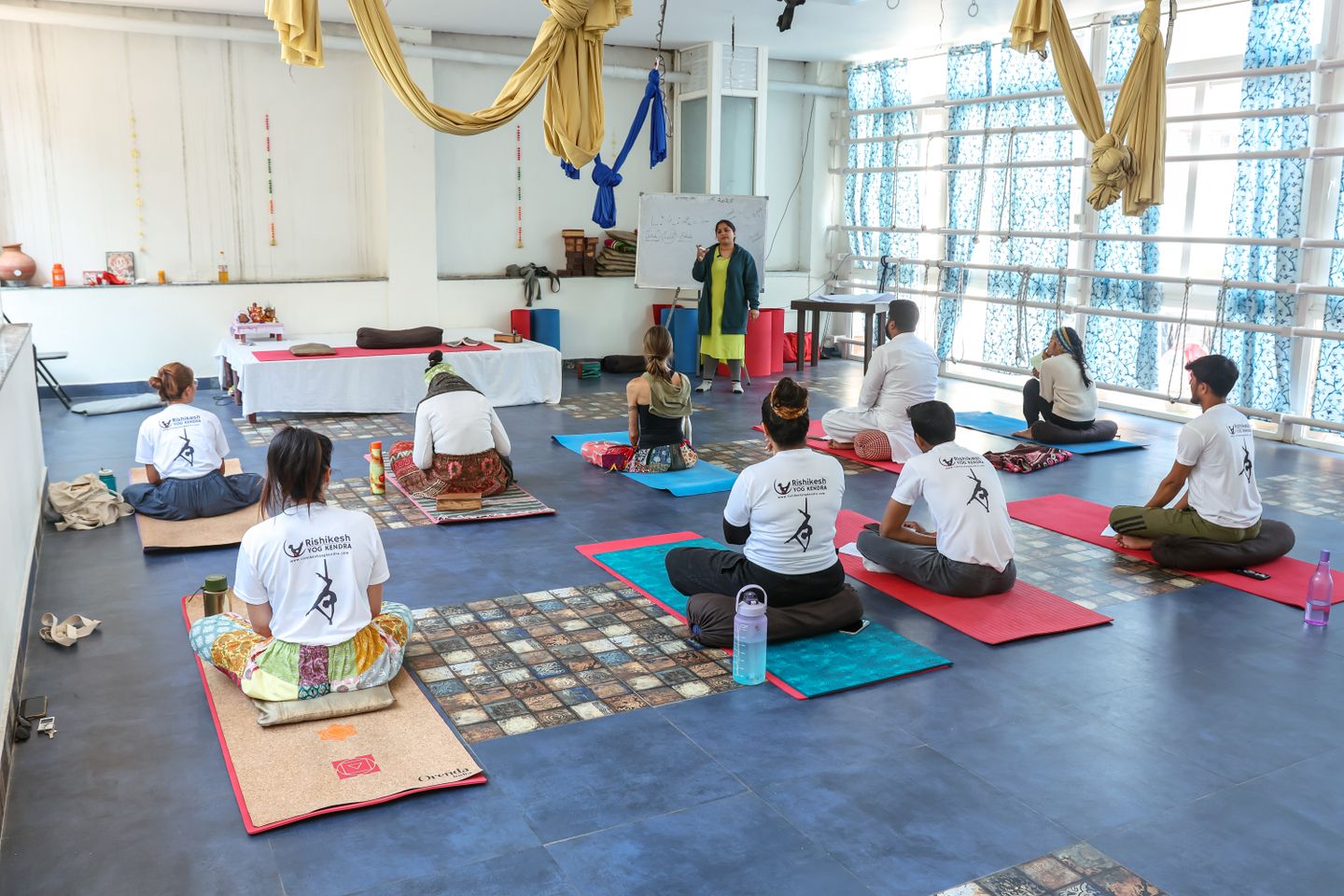
Expect an ordinary household
Choose a time that usually works, while accepting that the room may still be used by others. Let household members know when you plan to practice if that helps. Keep doors, walking routes, and frequently needed objects accessible.
Start with a sequence you can leave safely and easily. Avoid arrangements that depend on balancing without support or moving around scattered props. A simple practice is easier to pause when attention needs to move elsewhere.
Use small complete sections
Divide the session into short parts: an opening pause, a few standing or seated movements, and a comfortable finish. Each part can make sense by itself. This gives you natural stopping points without needing to remember a complicated progression.
Choose an easy resting position between sections. Put both feet down after a balance, return to upright after a reach, or settle into a stable chair. A deliberate return helps you respond to an interruption without hurrying out of a movement.
Make restarting optional
After the interruption, check how much time and attention you have left. You can restart with an uncomplicated pause, continue with one familiar movement, or end the session. There is no need to catch up with a timer or repeat everything.
If the pause was long, begin again gently rather than jumping directly into the position you left. Clear the space once more, especially if someone moved through it. Choose the current version of the room and your day as the new starting point.
Keep a shorter version ready
Write a brief fallback sequence you can remember: sit comfortably, lift and lower each arm, stand with support if useful, and finish. Use it when a longer session is repeatedly interrupted. The shorter option can become a dependable part of home life.
Notice which interruptions are predictable and adjust practical details around them. A different room, fewer props, or another time window may help. Keep your changes modest, so improving the setup does not become a larger project than the practice itself.
A few common questions
Does an interrupted session still count?
There is no score to preserve. You have spent time practicing, even if the session changes length. You can finish there or return later when it is convenient.
How can I practice in a busy home?
Choose a simple sequence, keep the space clear, and use short sections that are easy to pause. Discuss a suitable time with others when practical, while keeping a shorter version available.
Published by the Lumisoli journal.